Best AI Image Generation Models in 2026: Which One Should You Actually Use?
Choosing the right AI image model is no longer about finding one winner. Compare ChatGPT Images, Gemini Imagen, FLUX, Midjourney, Ideogram, and open-source models to discover which tool fits your creative workflow.
A friend messaged me last week asking, 'Which AI image tool should I actually pay for?' and I realized I didn't have a quick answer anymore. Two years ago this was easy—Midjourney for art, DALL·E for convenience, Stable Diffusion if you wanted full control. Done.
That answer doesn't work anymore. The field has split into specialists. There isn't one 'best' model in 2026—there's a best model for what you're actually trying to do. Choosing the wrong one often means fighting the tool instead of focusing on your creativity.
So rather than chasing marketing claims or endless 'Top 10 AI Image Generators' lists, let's look at what each major model genuinely does well and where it fits into a real creative workflow.
The best AI image model isn't the one with the biggest hype—it's the one that's built for the kind of images you want to create.
The Field Got Crowded, and That's a Good Thing
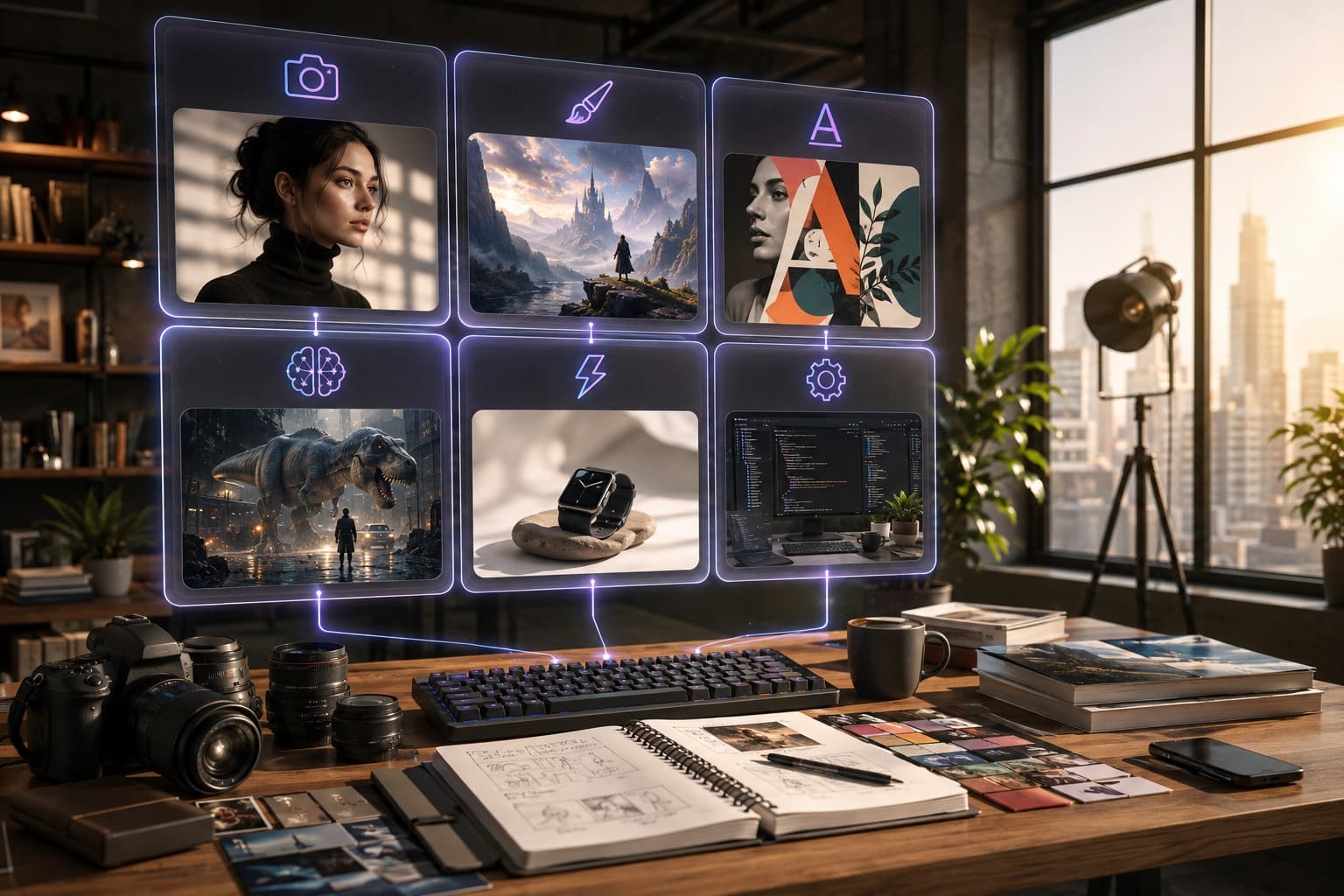
A year ago, most conversations revolved around Midjourney versus a handful of Stable Diffusion models. Today the landscape is much more competitive. Instead of one general-purpose model trying to do everything, several AI models now excel in specific areas such as photorealism, typography, artistic illustration, prompt understanding, or production speed.
That's actually good news. Whatever you're creating—marketing visuals, portraits, social media graphics, posters, product photography, or concept art—there's likely a model designed to handle that task particularly well.
The challenge is that many comparison articles become outdated within a few months as new versions are released. Instead of memorizing a single winner, it's far more useful to understand the strengths of each model so you can choose the right tool whenever your project changes.
If You Want the Most Photorealistic Results
When realism is your top priority, Google's Imagen models are currently leading the way. Skin texture, natural lighting, fabric details, reflections, and overall image realism are consistently impressive, making them an excellent choice for anyone creating images that need to feel like genuine photographs.
Rather than giving you endless creative controls, these models focus on producing believable, camera-like images from the start. If your goal is realism instead of artistic interpretation, they're difficult to beat.
Best for: Portrait photography, product photography, travel scenes, architecture, lifestyle content, and realistic marketing visuals.
If You Want the Best All-Around Workhorse
FLUX has quickly become one of the most balanced image generation models available. It may not dominate every category, but it consistently delivers excellent quality, reliable prompt understanding, and fast generation speeds without forcing you into a specialized workflow.
If you're looking for one model that can comfortably handle client work, marketing assets, social media graphics, portraits, and creative concepts, FLUX is an excellent starting point.
Best for: Everyday image generation, marketing creatives, business visuals, and creators who want one dependable model for most projects.
If You Care About Text and Typography
Generating readable text inside images used to be one of AI's biggest weaknesses. Today, Ideogram has built a strong reputation for producing clean typography, making it an outstanding option for posters, advertisements, packaging mockups, banners, and social media graphics that include visible text.
If your design relies on headlines, product labels, or typography as part of the final artwork, choosing a model optimized for text can save hours of editing later.
Best for: Posters, flyers, packaging, banners, social media graphics, logos, and typography-focused designs.
If You Want Artistic, Stylized Work
Midjourney continues to be the go-to choice for creators who value artistic style over strict realism. It consistently produces visually striking illustrations, cinematic compositions, concept art, and creative brand visuals with very little effort.
Recent versions have improved prompt understanding, generation speed, and even text rendering, making Midjourney much more practical for professional creative work while still maintaining its signature artistic style.
Best for: Concept art, fantasy scenes, illustrations, editorial artwork, cinematic compositions, and highly stylized visuals.
If You Need an AI That Understands Complex Prompts
OpenAI's image generation model inside ChatGPT has become one of the strongest choices for understanding long, detailed prompts. Instead of focusing on only a few keywords, it does an excellent job of following layered instructions involving multiple subjects, interactions, compositions, and creative constraints.
Although image generation may take slightly longer than some lightweight models, the improved prompt comprehension often produces more accurate results on the first attempt, reducing the need for constant prompt rewriting.
Best for: Detailed storytelling scenes, complex compositions, multi-subject images, and prompt-heavy creative workflows.
If You Need Fast, Affordable High-Volume Generation
Not every project requires maximum image quality. Sometimes speed and cost matter more, especially when generating dozens or even hundreds of variations for product catalogs, advertising experiments, or design concepts.
Lightweight AI image models are designed specifically for these workflows. They generate images much faster and at a lower cost, making them ideal for rapid iteration before moving to a premium model for final production assets.
Best for: Product variations, A/B testing, marketing concepts, ecommerce assets, and large-scale image generation.
If You Want Open-Source and Full Control
Not everyone wants to rely on subscription services or cloud-based image generation. Open-source AI image models continue to attract developers, researchers, and creative teams who want complete control over their workflow. These models can be hosted locally, fine-tuned for specific projects, and integrated into custom applications without depending on third-party platforms.
The trade-off is a steeper learning curve. While the leading closed models generally produce better results out of the box, open-source models offer unmatched flexibility for those willing to invest time in setup and customization.
Best for: Developers, researchers, technical creators, self-hosted workflows, and teams that require complete control over their AI pipeline.
So... Which One Should You Actually Pick?
The biggest mistake people make is trying to find one model that does everything perfectly. That model simply doesn't exist anymore. Today's AI landscape is full of specialists, and choosing the right one depends entirely on what you're trying to create.
- Want ultra-realistic photography? Choose Gemini Imagen.
- Need beautiful artistic illustrations? Midjourney remains an excellent choice.
- Creating posters or social media graphics with readable text? Ideogram is difficult to beat.
- Working with detailed prompts and complex scenes? ChatGPT Images shines here.
- Looking for one dependable everyday model? FLUX is a great all-round option.
- Need complete ownership and customization? Consider open-source models.
The Real Shift in 2026
The biggest change isn't that one model suddenly became dramatically better than every other option. Instead, the AI image generation landscape has evolved into a toolbox where every model has its own strengths. Professionals rarely rely on a single platform anymore—they switch between tools depending on the project, the client, and the desired outcome.
Once you stop asking 'Which AI image generator is the best?' and start asking 'Which one is best for this project?', choosing the right model becomes much easier. That's the mindset that will consistently produce better creative results in 2026 and beyond.
The best AI image generator isn't the one everyone else is using—it's the one that helps you create the image you actually have in mind.
Quick Recommendations Based on Your Goal
Still unsure which model to use? Here's the recommendation I'd give if we were sitting together planning your next project. Instead of looking for one perfect AI model, match the model to the kind of image you want to create.
- 📸 Realistic portraits and lifestyle photography → Gemini Imagen
- 🎨 Artistic illustrations and concept art → Midjourney
- 📝 Posters, banners and typography-heavy designs → Ideogram
- 🧠 Complex prompts with multiple subjects → ChatGPT Images
- ⚡ Everyday content creation and marketing assets → FLUX
- 🔧 Self-hosting and complete customization → Open-source models
How We Recommend Choosing Models at PromptGenz
At PromptGenz, we don't believe there's one AI model that fits every creative task. That's why our prompt collections are designed to work across multiple image generators. A cinematic travel prompt might look incredible in Midjourney, while the same prompt can produce a highly realistic editorial-style photo in Gemini Imagen or ChatGPT Images. The best approach is to treat prompts as your creative foundation and let the model amplify the style you're aiming for.
A great prompt can improve any AI model. The right AI model simply helps that prompt reach its full potential.