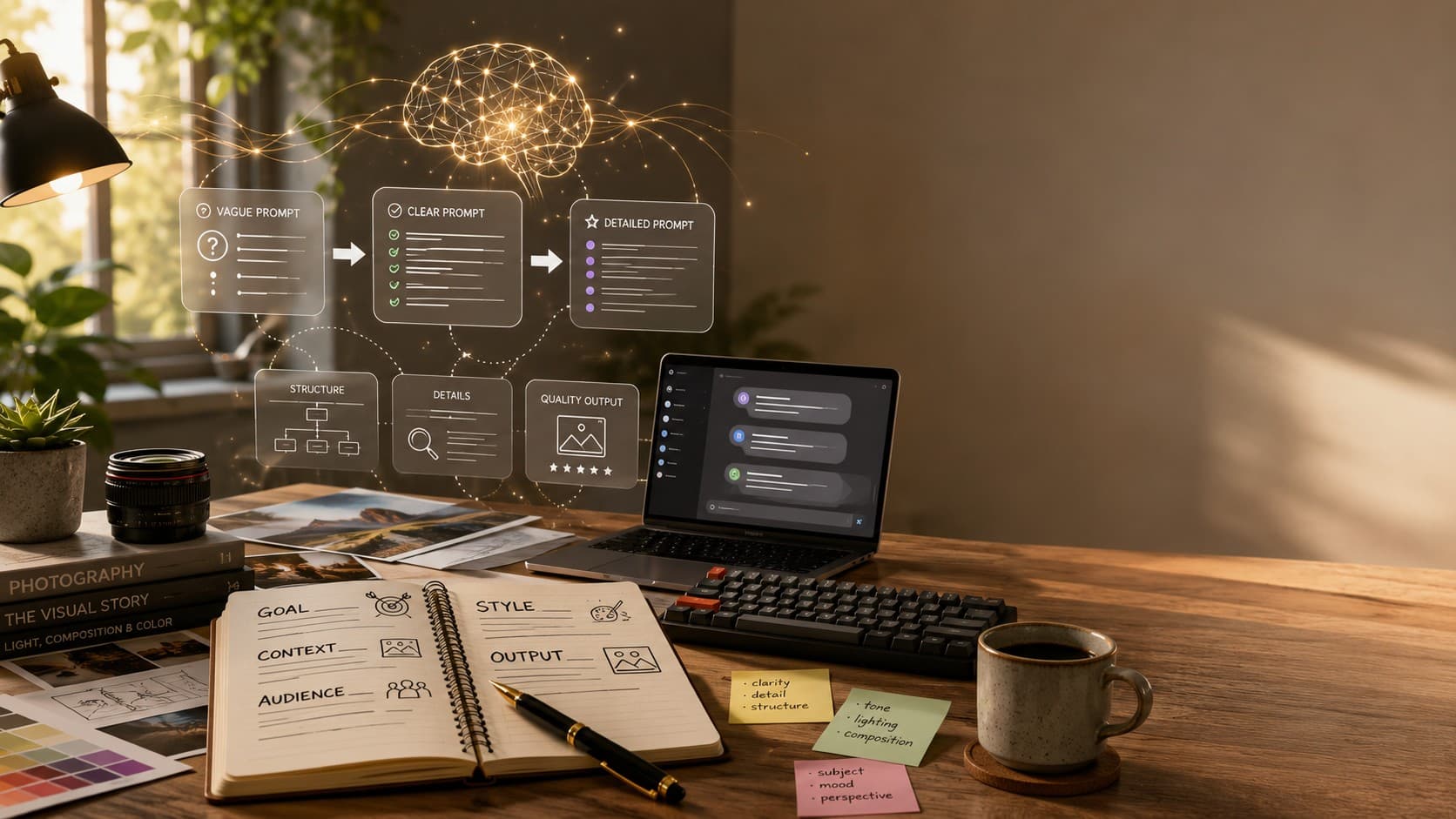
ChatGPT vs. Image Prompting: Why the Rules Are Different
Learn the key differences between ChatGPT prompting and AI image prompting. Discover why the same prompt works differently across language models and image generators, with practical examples and expert tips.
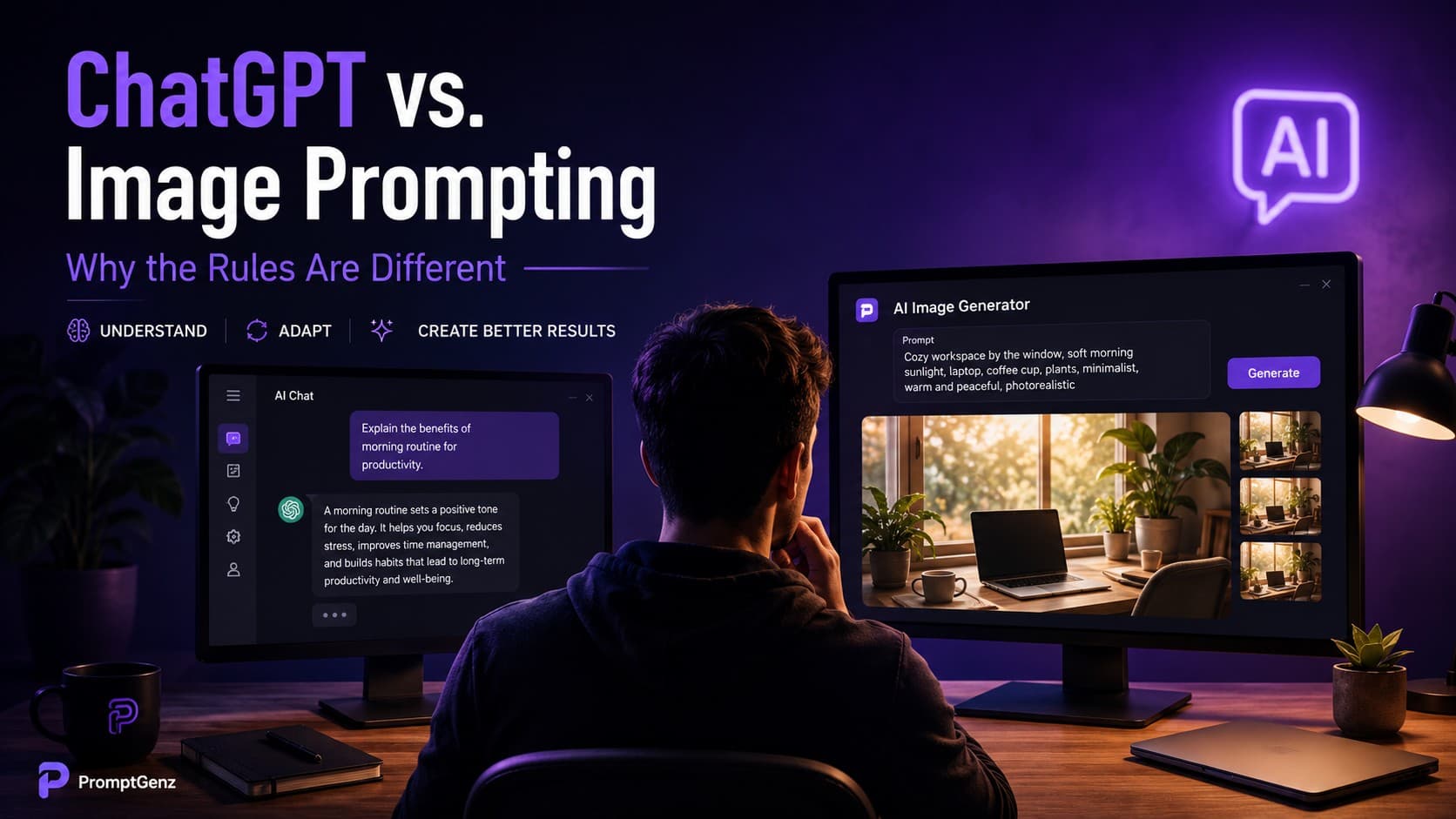
If you've become comfortable writing prompts for ChatGPT and then switched to an AI image generator like Midjourney or Flux, you've probably noticed that the same prompting style doesn't produce the same quality of results. A prompt that generates an excellent written response can easily create a generic or confusing image. That's not because you're doing anything wrong—it's because language models and image models interpret prompts in fundamentally different ways.
Although both rely on prompt engineering, ChatGPT and AI image generators are designed to solve completely different problems. One focuses on understanding instructions and generating natural language, while the other translates descriptive text into visual compositions. Learning how these differences affect prompt writing is one of the fastest ways to improve the quality of your AI-generated content.
In this guide, we'll compare ChatGPT prompting and AI image prompting side by side, explain why the same prompt rarely works well across both, and share practical examples that help you write more effective prompts for each type of AI model.
The Core Difference: Conversation vs. Composition
The biggest difference between ChatGPT prompting and AI image prompting lies in how each model interprets your instructions. ChatGPT is built for conversation. It reads your prompt much like a person reads an email—understanding intent, context, tone, and reasoning before generating a response. You can ask follow-up questions, request revisions, or change direction halfway through a conversation, and the model adapts naturally.
AI image generators work differently. Instead of reasoning through your request like a conversation, they interpret your prompt as a visual description. Every word helps define what should appear in the final image, including the subject, environment, lighting, colors, composition, camera angle, and artistic style. Rather than understanding your intent, image models map descriptive words to visual patterns they have learned during training.
This is why prompts that perform well in ChatGPT often produce disappointing images. A phrase such as 'make it moodier' gives a language model enough context to understand your request, but an image model benefits from specific visual instructions like 'low-key lighting, dark shadows, desaturated colors, cinematic atmosphere, and dramatic contrast.' The more descriptive your prompt becomes, the more predictable the generated image will be.
ChatGPT vs. Image Prompting at a Glance
Understanding this distinction is the first step toward becoming a better prompt engineer. Instead of treating every AI model the same way, adjust your prompting style based on what the model is designed to produce. Once you separate conversational prompting from descriptive prompting, you'll achieve better results across both text and image generation.
Why Prompt Structure Works Differently
Prompt structure influences ChatGPT and AI image generators in different ways because each model processes information differently. With ChatGPT, structure mainly improves clarity. Organizing your request into paragraphs, bullet points, or numbered instructions helps the model understand your objective, but it still relies on natural language reasoning to generate a response.
Image generation models use structure differently. Rather than interpreting a conversation, they analyze descriptive elements that define what should appear in the final image. The order of those elements can influence the composition, with many models giving greater importance to the beginning of the prompt. For that reason, experienced prompt writers often describe the main subject first, followed by the environment, lighting, camera angle, artistic style, and quality modifiers.
Consider the following two image prompts:
"A red sports car on a mountain road at sunset, cinematic lighting, ultra detailed."
"Ultra detailed, cinematic lighting, sunset over a mountain road with a red sports car."
A language model would interpret both prompts in almost the same way because the overall meaning remains unchanged. An image model, however, may produce noticeably different compositions depending on how the prompt is organized. Leading with the primary subject generally creates more consistent results because it establishes the visual focus before introducing supporting details.
The takeaway is simple: when writing prompts for ChatGPT, prioritize clear instructions. When writing prompts for image generators, prioritize clear visual descriptions with the subject placed first whenever possible.
Why Specificity Means Something Different
Both ChatGPT and AI image generators benefit from specific prompts, but the type of detail each model expects is very different. With ChatGPT, specificity helps define the task. The more clearly you describe the objective, audience, tone, format, and constraints, the better the model can generate a relevant response.
Image models, however, use specificity to build a visual scene. Instead of explaining what you want the AI to do, you need to describe exactly what should appear in the image. Details such as clothing, expressions, lighting, weather, camera angle, composition, colors, and artistic style all help reduce ambiguity and produce more consistent results.
Compare how specificity changes each type of prompt:
**ChatGPT Prompt:** "Write a 600-word blog post for beginner freelancers explaining how to price their first project. Use a friendly but confident tone and include practical examples."
**Image Prompt:** "A woman in her 30s wearing a green wool coat, walking through a misty autumn forest, soft overcast lighting, low-angle camera shot, cinematic composition, ultra-realistic photography."
The ChatGPT prompt defines the writing task, while the image prompt defines the visual appearance. Although both are specific, they focus on completely different types of information. Language models need context and instructions, whereas image models need descriptive visual details.
When important visual details are missing, image generators tend to fill those gaps with generic interpretations. That's why vague prompts often produce flat lighting, average compositions, or repetitive subjects. Adding precise visual descriptions gives the AI far less room to guess and leads to more predictable, higher-quality results.
How Iteration Works in ChatGPT vs. Image Models
Another major difference between ChatGPT and AI image generators is how they handle iteration. With ChatGPT, improving an answer is usually a conversation. You can ask the model to rewrite a paragraph, change the tone, simplify an explanation, or expand on a specific section while keeping the rest of the response intact. The model uses the conversation history to understand what has already been discussed and builds upon it.
Image generation follows a different workflow. Instead of refining an image through continuous conversation, each generation is generally treated as a new attempt based on your updated prompt. Even small wording changes can significantly alter the composition, lighting, subject placement, or artistic style. Because of this, experienced prompt writers often experiment with multiple prompt variations rather than expecting a single prompt to evolve through conversation.
Modern AI image tools have introduced editing features such as inpainting, outpainting, and image references, but effective image prompting still depends on writing a strong initial description. The more accurately you communicate your visual idea from the beginning, the fewer generations you'll need to achieve your desired result.
A Practical Example: The Same Idea, Two Different Prompt Styles
Imagine you want to create content about 'a peaceful morning in a small café.' Although the theme is identical, the prompt should be written very differently depending on whether you're using ChatGPT or an AI image generator.
**ChatGPT Prompt:** "Write a short reflective article (around 200 words) about the peaceful atmosphere of a small café early in the morning before customers arrive. Use a calm, observational tone that makes readers feel like they're quietly enjoying a cup of coffee while people-watching."
**Image Prompt:** "A cozy small café interior during early morning, warm sunlight streaming through large windows, steam rising from a freshly brewed cup of coffee, wooden tables, empty chairs, soft golden lighting, shallow depth of field, cinematic photography, ultra-realistic."
The ChatGPT prompt explains the writing task, tone, and audience, while the image prompt focuses entirely on what should be visible in the final scene. This comparison clearly demonstrates why the same prompting strategy cannot be applied equally across different AI models.
Where ChatGPT and Image Prompting Overlap
Although ChatGPT and AI image generators require different prompting techniques, they still share several fundamental principles. In both cases, the quality of the output depends on how clearly you communicate your intent. Understanding these shared habits helps you become a better prompt engineer regardless of which AI tool you're using.
The following best practices apply to both conversational AI and image generation models:
- **Be specific instead of vague** — Clear instructions produce better responses, while detailed visual descriptions generate stronger images.
- **Use negative guidance when appropriate** — Tell ChatGPT what tone or style to avoid, or instruct an image model to exclude unwanted elements such as text, watermarks, or distorted hands.
- **Provide examples whenever possible** — ChatGPT performs better when given sample writing styles, and image models benefit from reference images or descriptive style examples.
- **Treat the first result as a starting point** — Whether you're refining text or generating images, the best outputs usually come after several rounds of experimentation and improvement.
- **Keep prompts focused** — Avoid combining too many unrelated requests into a single prompt. Clear, focused prompts are easier for every AI model to understand.
The biggest difference is not whether you should be clear or specific—those principles always matter. The real difference lies in what kind of information each model expects. ChatGPT wants instructions and context, while image models rely on descriptive visual details to create the final result.
Final Thoughts
Prompt engineering isn't one universal skill—it changes depending on what you're asking an AI model to create. ChatGPT is designed to understand instructions, context, and reasoning, while AI image generators rely on detailed visual descriptions to produce compelling artwork. Understanding these differences allows you to communicate more effectively with each type of AI model and consistently achieve better results.
Rather than trying to use the same prompting style everywhere, adapt your approach based on the tool you're using. Think like a writer when working with ChatGPT, and think like a photographer or film director when writing prompts for image generation. This simple shift in mindset can dramatically improve the quality of both your written content and AI-generated visuals.
Most importantly, remember that prompt engineering is a skill developed through experimentation. Test different prompt structures, compare the results, refine your wording, and continue learning how each AI model responds. Every iteration helps you build stronger prompting habits that transfer across a wide range of AI tools.
Continue Improving Your AI Prompting Skills
Great AI results start with better prompts. Whether you're writing with ChatGPT or creating stunning AI-generated images, understanding how different models interpret your instructions will consistently improve your outputs.
Explore more AI prompting guides, practical tutorials, and ready-to-use prompt collections on PromptGenz to continue building your prompt engineering skills and get the most from today's leading AI tools.